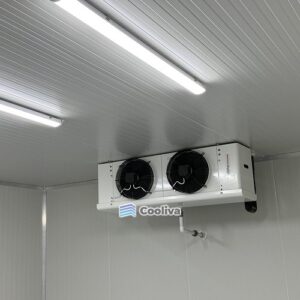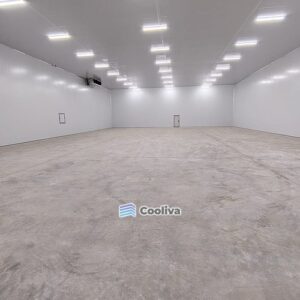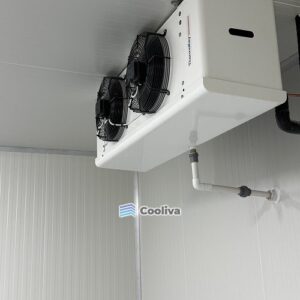

Cold storage warehouses in Riyadh depend on four things: a location your trucks can reach, a building that can carry cold rooms, enough electrical capacity and equipment selected for the city’s heat and dust. If you plan to lease an existing warehouse, the checks you make before signing matter more than anything you do afterwards. This guide gives you a pre-lease checklist, compares two ways to build and shows how to phase the investment.
Riyadh as a distribution base
Riyadh is the Kingdom’s capital and its largest city. Its restaurants, cafes, cloud kitchens, hotels, supermarkets and groceries need chilled and frozen deliveries every day, often in small drops within tight time windows. A cold store inside the city shortens those routes. That counts most in summer, when every extra stop with the van doors open works against the cold chain. So the first decision is not the size of the freezer. It is where your customers are and how your vehicles reach them. If you need one walk-in room and not a warehouse, see our notes on cold rooms in Riyadh.
Choosing the location
- Truck access: your suppliers arrive in trailers and your deliveries leave in vans. Check street width, turning space and whether a trailer can reach the door. Start your search in the city’s warehouse and industrial zones, such as Al Sulay and the Second Industrial City.
- Delivery routes: map the drive to your main customers at the hours you deliver. Check which truck movement restrictions apply on those routes.
- Permitted use: confirm with the municipality that the building can be licensed for your activity. Food and pharmaceutical storage also bring SFDA requirements.
For zone planning, racking and plant options, read our national guide to cold storage warehouses in Saudi Arabia.
Pre-lease checklist for an existing warehouse
Walk the building with your cold room contractor before you sign. Check each point:
- Clear height: measure to the underside of the roof structure, not to the ridge. It sets the room height, the rack levels and the service space above the ceiling panels.
- Floor load and condition: ask for the slab capacity and compare it with your racking and forklift loads. Look for cracks, uneven areas and damp. A freezer room typically adds floor insulation and a new wearing slab on top.
- Electrical capacity: read the available three-phase supply at the meter and ask whether an upgrade is possible. Refrigeration will be your main electrical load.
- Roof and walls: look for leaks, corroded sheets and gaps. Water and hot air above the cold rooms add heat load and damage panels.
- Truck access on the plot: check door height, yard depth and whether a dock or ramp exists.
- Outdoor units: find a shaded, ventilated place for the condensing units and get the landlord’s approval for it in writing.
- Drainage: locate a drain connection for defrost water and washing water.
- Lease terms: match the lease length to your investment. Agree in writing on wall and roof openings, floor works, the electrical upgrade and what you must restore when you leave.
What Riyadh’s heat and dust mean for equipment
Riyadh has a dry desert climate. Summer highs reach the mid-40s °C and rooftops get hotter. Standard catalogue ratings often assume 32 °C or 35 °C outdoor air, so condensing units here are commonly selected for a 46 to 50 °C design ambient. A unit chosen on catalogue conditions trips on high pressure on the hottest afternoons, when your rooms need it most.
Dust is the second enemy. It coats condenser coils and blocks airflow. Each 1 °C rise in condensing temperature costs roughly 2 to 4 % more compressor energy. Plan coil cleaning as routine and repeat it after every sandstorm. Place the units in shade with free airflow, never in a closed gap between two buildings. Keep them outside the warehouse, because indoors they heat the air around your cold rooms.
Two things work in your favour. Dry air carries less moisture through the doors than the humid air of Jeddah or Dammam, so evaporators frost more slowly. Winter nights are cool, which is why head pressure control through condenser fan speed keeps the plant stable all year. More detail is in cold room design for the Saudi climate.
Rooms inside the warehouse or an insulated building?
There are two ways to build. The first puts freestanding insulated rooms inside the hall, often called box in box. The second lines the whole building with panels and cools the entire volume. With rooms inside, one hall can hold chiller rooms for dairy and produce beside freezer rooms for frozen stock, with dry goods on the remaining floor.
| Point | Rooms inside the warehouse | Insulating the whole building |
|---|---|---|
| Best for | Leased buildings, mixed chilled, frozen and dry stock, growing operations | Owned or long-lease buildings used as one large pallet store |
| Use of space | Loses some area and height around the rooms | Uses the full footprint and height |
| Phasing | Add rooms one at a time | One large step |
| Floor | Each freezer room gets its own insulated floor | The whole slab must suit the temperature |
| At lease end | Panels and equipment can be dismantled and reused | Most of the value stays with the building |
For a leased warehouse, rooms inside the hall are usually the safer choice.
Phase the project so capacity grows with demand
You do not need the final capacity on day one. You do need the final plan on day one.
- Draw the final layout first, with every future room, door and aisle.
- Build the first rooms where they do not block the next ones.
- Size the main electrical supply, the main panel and the cable routes for the final load.
- Reserve outdoor space and pipe routes for future condensing units.
- Give each room its own refrigeration, so new rooms start up without stopping the running ones.
- Decide which chiller may become a freezer later. Build it with freezer-grade panels and an insulated floor from the start, because neither can be added afterwards without rebuilding.
Phasing also spreads the budget. Material and equipment prices change, so a current quotation is the only reliable figure. Our guide explains what drives cold room cost in Saudi Arabia.
Cold storage in Riyadh: questions before you sign
Can any warehouse in Riyadh be converted into cold storage?
No. The building needs enough clear height, a sound floor, sufficient electrical capacity and a place for outdoor units. It also has to be licensable for your activity. Check these points before you sign, because none of them is cheap to fix afterwards.
Where should the condensing units go?
Outdoors, in shade, with free airflow and safe access for cleaning. Ground level beside the building is the easiest place to service. A rooftop is hotter and needs a structural check. Agree the position with the landlord in writing.
How much power does a cold storage warehouse need?
There is no reliable figure per square metre. The load depends on the temperatures, the daily product intake, the door traffic and the summer design conditions. Ask for a heat load calculation and the resulting connected load, then compare it with the supply at the meter before you sign.
What happens to the cold rooms when the lease ends?
Panels with cam-lock joints can be dismantled and rebuilt at a new site. Evaporators and condensing units move with them. Floors, pipe runs and part of the electrical work stay behind. Agree in the lease what you must restore.
Building your Riyadh cold store with Cooliva
Cooliva is based in Riyadh and builds cold rooms and freezer rooms for restaurants, retailers and food distributors. For warehouse projects it designs, supplies and installs large warehouse cold storage, from single rooms inside a hall to multi-zone facilities. A site review before you sign the lease shows what the building allows. Send the building location, dimensions and your pallet count through the contact page or call +966 59 799 1000.