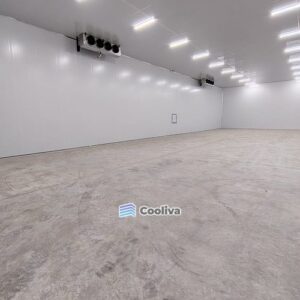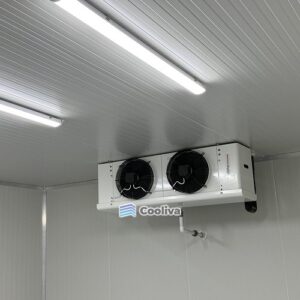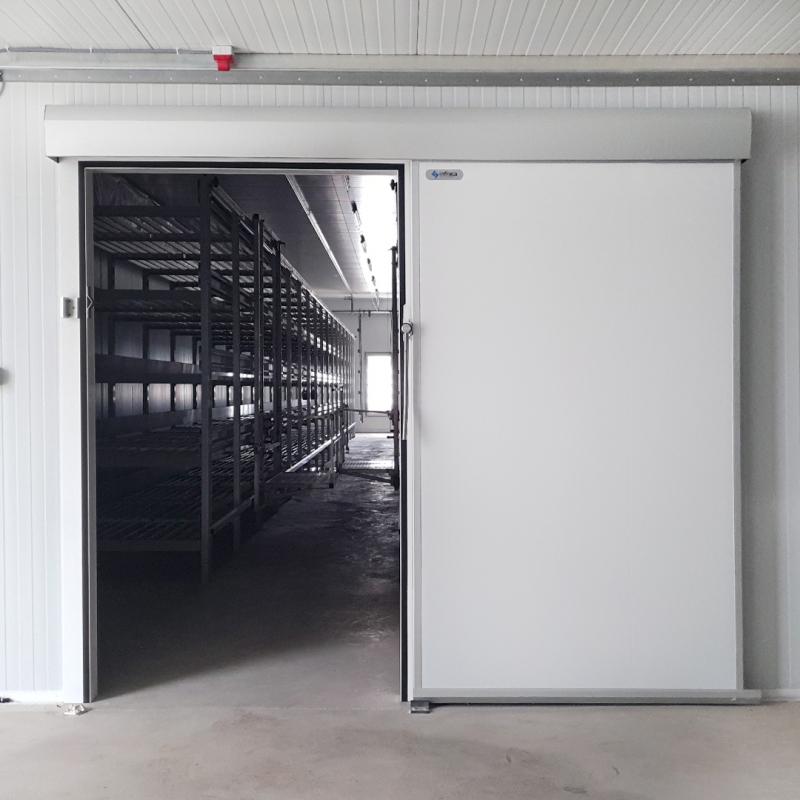
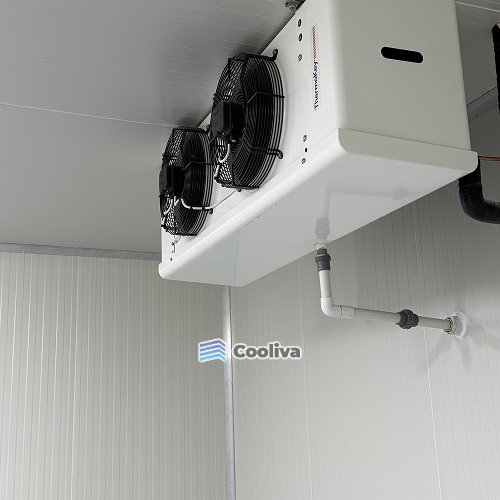
The right cold room temperature depends on what you store. General chilled food typically sits at 0 to +4 °C, fresh meat at -1 to +2 °C and frozen food at -18 °C or colder. Tropical fruit needs a much warmer room. Use the table below as a reference for cold room temperature by product and confirm every value with your supplier and the applicable SFDA requirements.
Typical storage temperatures by product group
| Product group | Typical storage temperature | Humidity and storage notes |
|---|---|---|
| General chilled food | 0 to +4 °C | Bacteria multiply fastest between +5 and +60 °C |
| Dairy | +2 to +4 °C | Fits the general chilled range |
| Fresh meat and poultry | -1 to +2 °C | Store apart from ready-to-eat food |
| Fresh fish | Around 0 °C | Keep separate from other foods |
| Leafy greens, apples, grapes, carrots | 0 to +2 °C | 90 to 95 percent humidity. Keep apples away from leafy greens |
| Oranges | +4 to +8 °C | Chilling-sensitive |
| Ripe tomatoes | +8 to +10 °C | Chilling-sensitive. Give off ethylene |
| Cucumbers | +10 to +12 °C | Chilling-sensitive. Damaged by ethylene |
| Mangoes | +10 to +13 °C | Chilling-sensitive |
| Bananas | +13 to +14 °C | Chilling-sensitive. Give off ethylene |
| Dates | Near 0 °C | Frozen at -18 °C for long storage |
| Frozen food | -18 °C or colder | Needs a freezer room |
| Ice cream | -23 to -25 °C | Colder than a standard freezer room |
| Pharmaceuticals | Commonly +2 to +8 °C | Some products need +15 to +25 °C. Follow the label |
These are typical values, not legal limits. Your supplier’s specification and the SFDA requirements for your product come first.
The display shows air, not product
The number on the controller is the air temperature at one sensor. Your product can be several degrees away from it. A crate of vegetables loaded warm needs hours to cool to its core. In the other direction, air temperature jumps at every door opening and during defrost while the core of a chilled product barely moves. Judge the room by product temperature and by the trend over a day, not by one reading.
Position matters too. The air leaving the evaporator is the coldest in the room, so produce stacked in that stream can freeze while the display shows a safe value. The warmest spots are usually near the door and inside tightly packed stacks. Keep product off the walls and below the evaporator air stream so that cold air reaches every box.
Why one room for everything is a compromise
A room holds one temperature, one humidity level and one body of air. Put products with different needs inside and something gives:
- Temperature: bananas suffer chilling damage at the temperature that keeps leafy greens fresh. Leafy greens wilt at banana temperature.
- Ethylene: apples, bananas and tomatoes give off ethylene gas. It damages leafy greens and cucumbers stored in the same air.
- Hygiene: raw meat, poultry and fish belong apart from ready-to-eat food and dairy.
- Humidity: leafy greens want 90 to 95 percent humidity. Cardboard cartons soften in air that damp.
If one room is all you have, set it for food safety first. Hold the range that your chilled food needs and move chilling-sensitive produce elsewhere. Do not pick a middle value that suits nothing. Our articles on cold storage for fruits and vegetables and cold rooms for meat, poultry and seafood go deeper into each group.
When to split into two rooms or a multi-chamber room
Split the storage when temperature ranges do not overlap or when volumes justify it. Typical cases:
- Chilled and frozen stock always need two rooms. A chiller room cannot hold frozen food and a freezer room ruins fresh food.
- Fresh meat or fish in volume needs its own room, colder than the general chiller.
- Tropical and chilling-sensitive produce in volume needs a warmer room.
- A cutting or packing area is a separate space. Meat processing rooms commonly run at +10 to +12 °C.
A multi-chamber cold room puts several temperature zones under one roof. The chambers share walls, which saves panels and floor space. Each chamber has its own evaporator, controller and door. Whatever the layout, confirm each chamber temperature with your supplier and the SFDA requirements for the product.
Colder is not safer
Setting the room lower than the product needs costs you twice. The first cost is energy. Each 1 °C lower evaporating temperature costs roughly 2 to 4 percent more compressor energy. The second cost is product. Chilling-sensitive produce shows damage, leafy greens freeze a little below 0 °C and a colder coil pulls more moisture out of unwrapped food. Set the controller inside the product range, not below it.
Storage temperature is not cooling speed
A cold room is built to hold product at temperature. It is not built to pull hot food down fast. Loading warm product beyond the design quantity raises the room temperature for hours and puts the rest of the stock at risk. Kitchens that cook in batches use a blast chiller first. The benchmark is a core temperature from +70 °C to +3 °C within 90 minutes. Confirm the cooling rules for your food with the applicable SFDA requirements.
How to verify the temperature
- Use a calibrated probe thermometer. Measure the core of the product. For packaged goods, measure between two packs.
- Check several positions: near the door, in the middle of a stack and close to the evaporator.
- Measure after a delivery and at the end of a busy shift, not only early in the morning.
- Fit a data logger that records around the clock and set a high temperature alarm.
- Have thermometers and data loggers calibrated every year.
- Keep the records. Food inspectors commonly ask for them.
Our guide to cold room temperature monitoring covers sensors, loggers and alarms.
Frequently asked questions
What temperature should I set a restaurant walk-in chiller to?
General chilled food typically sits at 0 to +4 °C, so a setpoint near the middle of that range suits most kitchens. Confirm it with your supplier and the applicable SFDA requirements. Keep bananas, tomatoes and cucumbers out of this room.
Can I store vegetables and meat in the same cold room?
It is a compromise to avoid where you can. Fresh meat typically wants -1 to +2 °C and many vegetables want high humidity or warmer air. Raw meat also has to stay apart from food that is eaten uncooked. If you have only one room, use closed containers, separate shelves and the lowest shelf for raw meat. Check the temperatures with your supplier and the SFDA requirements.
Why does my probe read warmer than the room display?
The display shows air at one sensor. The probe shows the product. A gap between them usually means the product went in warm, the room is overloaded or boxes block the airflow. Food safety follows product temperature, so trust the probe and find the cause before the next delivery.
Is a -18 °C freezer room cold enough for ice cream?
Ice cream is typically stored at -23 to -25 °C. A room at -18 °C leaves no margin. Each door opening lets the surface soften and refreeze, which makes it icy. If you hold ice cream in volume, plan a colder room or chamber and read our article on freezer room design. Confirm the temperature with your supplier and the SFDA requirements.
Match the room to the product with Cooliva
Cooliva starts each project with the product list, because temperature decides the panels, the equipment and the number of rooms. From its base in Riyadh the company builds cold rooms and freezer rooms for restaurants, supermarkets, food suppliers and pharmaceutical storage. Send us your products and quantities to discuss a room or chamber for each group. Use the contact page or call +966 59 799 1000.