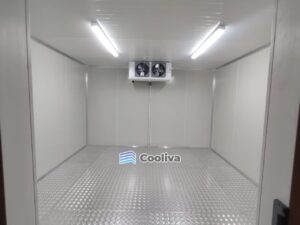
Cold storage for fruits and vegetables works when five things are right: a temperature matched to each product, high humidity, ethylene producers kept away from sensitive items, fast cooling after receiving and free airflow around every crate. No single setting suits all produce. Leafy greens want 0 to +2 °C, while bananas suffer below +13 °C. This guide shows you how to group your products and when a second room pays off.
Produce is still alive after harvest
A carrot or a mango keeps breathing after it is picked. It takes in oxygen, burns its own sugars and gives off heat, water vapour and carbon dioxide. Warmth speeds this up. As a rule of thumb, each 10 °C rise makes produce age two to three times faster. Cold storage slows the clock. It does not stop it and it does not repair product that arrived tired. Heat, water loss and ethylene end shelf life early.
Three temperature groups
Sort your products into groups before you set a thermostat. The values below are typical. Confirm them with your supplier and the applicable SFDA requirements.
| Product | Typical storage temperature | Group |
|---|---|---|
| Leafy greens, apples, grapes, carrots | 0 to +2 °C at 90 to 95 % humidity | Cold-loving |
| Oranges | +4 to +8 °C | Chilling-sensitive |
| Ripe tomatoes | +8 to +10 °C | Chilling-sensitive |
| Cucumbers | +10 to +12 °C | Chilling-sensitive |
| Mangoes | +10 to +13 °C | Chilling-sensitive |
| Bananas | +13 to +14 °C | Chilling-sensitive |
| Dates | Near 0 °C. Frozen at -18 °C for long storage | Special case, see below |
For meat, dairy and frozen food, see our guide to cold room temperature by product.
Chilling injury: when colder is worse
Cold damages tropical and subtropical produce well above freezing point. Bananas held below +13 °C turn grey or black and fail to ripen properly. Cucumbers develop pitted, water-soaked skin. Tomatoes lose flavour and turn mealy. Mangoes ripen unevenly. The damage often shows only after the product leaves the cold room, so the complaint comes from your customer, not your storekeeper. Injury grows with time and with every degree below the limit. One night does less harm than a week.
Humidity: where the weight goes
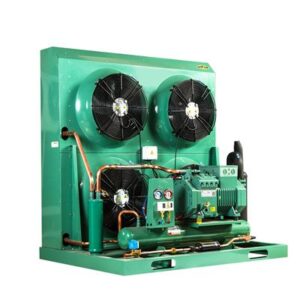
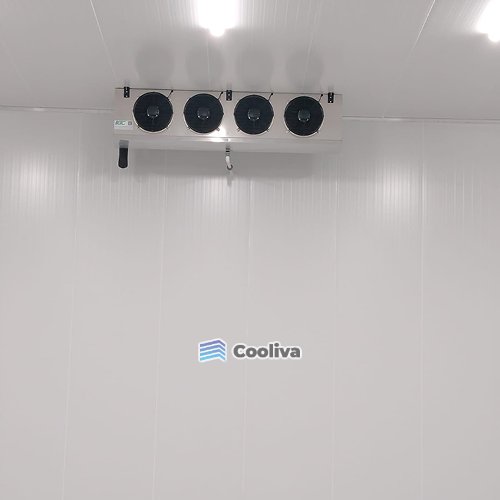
Fresh produce is mostly water and you sell it by weight. In dry air it wilts, shrivels and loses kilos. The cold-loving group needs 90 to 95 % relative humidity. A room designed for packaged food runs drier than that, because its evaporator pulls moisture out of the air. The fix sits in the design: a large evaporator working at a small temperature difference between coil and room air removes less water. Ask your contractor which humidity the room is designed for and read how cold room evaporators work. Keep free water off the product, because wet surfaces invite mould.
Ethylene: which products must not share a room
Ethylene is a natural ripening gas. Apples, bananas and tomatoes give it off. Leafy greens and cucumbers react to it: they yellow and spoil sooner. A matching temperature does not make two products good neighbours. Apples and leafy greens both like 0 to +2 °C, yet apples in the same room shorten the life of the greens.
- Keep apples away from leafy greens.
- Keep tomatoes away from cucumbers, even though their temperatures are close.
- Keep ripening bananas away from every ethylene-sensitive item.
Where separation is impossible, fresh air exchange and ethylene absorbers lower the gas level. Separation comes first.
Cool it fast after receiving
Every hour at dock temperature costs shelf life you cannot buy back. Give your receiving team a fixed routine:
- Check condition and temperature at the truck. Refuse product that is already wilted, bruised or mouldy.
- Move the delivery into the cold room within minutes. In the dry summer heat of Riyadh, produce left on a dock wilts fast.
- Spread warm loads out. Leave gaps between crates so cold air reaches each one.
- Respect the design quantity. Loading more warm product than the room was sized for raises its temperature for hours and warms the stock already inside.
Tell your contractor the daily intake in kilograms and the arrival temperature, so the refrigeration is sized for the pull-down. Large operations use a separate pre-cooling room where fans pull cold air through the boxes.
Airflow and stacking
Cold air must reach every crate. Five rules keep it moving:
- Use vented crates and keep them on pallets or shelves, never on the floor.
- Leave a gap between the stacks and the walls.
- Keep product below the evaporator air stream and never block the evaporator.
- Keep leafy greens out of the direct air blast. Air leaving the coil is colder than the room and greens freeze slightly below 0 °C.
- Rotate stock: first in, first out.
Dates: a special case for Saudi storage
Dates follow different rules from fresh greens. The harvest comes in late summer and autumn, while demand runs all year and peaks in Ramadan. Dry (tamr) dates store well near 0 °C. For long storage, freeze dates at -18 °C in a freezer room. This suits soft (rutab) dates, which spoil quickly at room temperature. Unlike leafy vegetables, dates want dry air: humidity makes them sticky and encourages mould and fermentation. Dates also absorb odours, so keep them away from onions, fish and other strong-smelling foods.
One room, two rooms or a multi-chamber room?
One room at one temperature always sacrifices part of a mixed load. At +2 °C the bananas, mangoes, tomatoes and cucumbers suffer chilling injury. At +10 °C the leafy greens, grapes and apples age far faster than they should. A compromise at +6 °C is too warm for the greens and too cold for the bananas.
- One room: set your chiller room for the cold-loving group. Keep bananas, mangoes and tomatoes outside it in a shaded, air-conditioned store and buy them in small quantities.
- Two rooms: they pay off when you hold both groups for more than a few days or when produce makes up a large share of your stock value. Wholesalers, distributors and supermarkets are typical cases: see cold rooms for supermarkets.
- Multi-chamber room: a multi-chamber cold room puts two or three zones inside one insulated structure. Each chamber has its own evaporator, setpoint and door. Shared walls save floor space and reduce heat gain compared with separate rooms.
Fruit and vegetable storage: frequently asked questions
Can tomatoes and cucumbers share a cold room?
Their temperatures are close, so many kitchens store them together. The problem is ethylene. Ripe tomatoes give it off and cucumbers yellow and soften when exposed. The shorter the time together, the smaller the effect. For longer storage, keep them in separate rooms or chambers.
Why do bananas turn black in my cold room?
That is chilling injury. Bananas need +13 to +14 °C, far warmer than a standard chiller at 0 to +4 °C. Below that range the skin turns grey and then black and the fruit fails to ripen. Keep bananas out of the chiller.
Do I need a humidifier in a vegetable cold room?
Not always. Start with the evaporator design, because a correctly sized coil keeps humidity high without extra equipment. A humidifier helps when you store leafy greens for longer periods or when the room cannot reach 90 to 95 % any other way. It needs clean water and regular cleaning.
How long do dates keep in cold storage?
It depends on the variety and its moisture content. Dry dates keep for months near 0 °C. Freezing at -18 °C extends storage life further. Ask your supplier for the storage life of your variety.
Plan your produce cold room with Cooliva
Cooliva is based in Riyadh and designs, supplies and installs cold rooms and freezer rooms for supermarkets, groceries, restaurants, central kitchens and food distributors. For produce, the team begins with your product list, daily intake and holding time. The plan then fixes the number of chambers and the temperature and humidity for each one. Send your product list through the contact page or call +966 59 799 1000.