
The right room type depends on three things: the temperature your product needs, the stock you hold at peak and how that stock moves in and out. A chiller room keeps fresh food cold without freezing it and a freezer room holds frozen stock at -18 °C or colder. A blast unit cools or freezes product fast before storage. This guide compares the six main types of cold rooms and freezer rooms used in Saudi Arabia and gives you five questions that lead to the right one.
Six room types at a glance
| Type | Typical temperature | Typical users | What to watch |
|---|---|---|---|
| Chiller room | 0 to +4 °C for general chilled food | Restaurants, cafes, supermarkets, dairy and beverage businesses | Products that need different temperatures or humidity |
| Freezer room | -18 °C or colder | Meat, poultry and seafood suppliers, frozen food distribution | Insulated floor, door heaters and defrost |
| Blast freezer or blast chiller | Air at -30 to -40 °C in a blast freezer | Central kitchens, catering, bakeries, food factories | Batch size and cooling time. It is not a storage room |
| Walk-in room | Chilled or frozen, set by the product | Restaurant kitchens, cafes, hotels, groceries | Shelf layout, door position and kitchen space |
| Multi-chamber room | A different temperature in each chamber | Hotels, catering, supermarkets, food distributors | Chamber order, shared walls and separate controls |
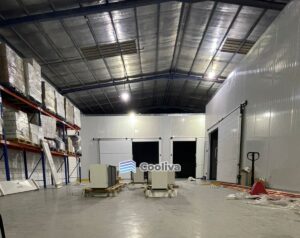
| Warehouse and industrial cold storage | Chilled, frozen or both in separate zones | Food distribution, logistics, industrial and pharmaceutical storage | Pallet racking, forklift doors, loading dock and floor |
These are typical values. Confirm the exact temperature for each product with your supplier and the applicable SFDA requirements.
What each type does best
Chiller rooms
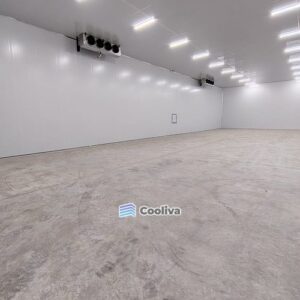
Chiller rooms keep fresh products cold without freezing them. General chilled food typically sits at 0 to +4 °C, dairy at +2 to +4 °C and fresh meat and poultry at -1 to +2 °C. Walls and ceiling typically use 80 to 100 mm insulated panels. Mixed stock needs care: bananas need +13 to +14 °C while leafy greens need 0 to +2 °C. Our guide to cold room temperature by product lists the common ranges.
Freezer rooms
Freezer rooms hold frozen food at -18 °C or colder. Ice cream typically needs -23 to -25 °C. The lower temperature changes the construction: 120 to 150 mm panels, an insulated floor, a door with frame heaters and a heated pressure relief valve. A freezer is a different build, not a chiller with a lower setting. Our comparison of cold room vs freezer room explains each difference.
Blast freezers and blast chillers
Blast freezers and blast chillers remove heat fast. The common benchmark for blast chilling takes cooked food from +70 °C to +3 °C at the core within 90 minutes. Blast freezing takes product to -18 °C at the core within about 240 minutes, with air at -30 to -40 °C. If you cook, bake or process in batches, plan a blast unit ahead of the storage room.
Walk-in rooms
Walk-in describes the format, not the temperature. It is a room you step into, sized for one kitchen or shop, with shelves along the walls and a hinged door for people and trolleys. Walk-in cold rooms run chilled or frozen. They suit kitchens and shops where staff pick stock by hand many times a day.
Multi-chamber rooms
Multi-chamber cold rooms place two or more chambers inside one insulated structure. Each chamber has its own temperature, evaporator and controller. A common layout puts the freezer behind the chiller, so the freezer door opens into cold air instead of a warm corridor. Choose this type when fresh and frozen products share one site.
Warehouse and industrial cold storage
At this scale stock moves on pallets. Large warehouse cold storage uses pallet racking, sliding or rapid roll doors for forklifts and a loading dock or anteroom held at +2 to +8 °C. Large freezers built on the ground need frost heave protection under the slab. Pharmaceutical storage commonly runs at +2 to +8 °C. Check SFDA requirements for your product before you fix the design.
Five questions that lead to the right room
- What do you store? The product sets the temperature and often the humidity. Products with different needs belong in separate chambers. Apples, bananas and tomatoes release ethylene, which damages leafy greens and cucumbers stored beside them.
- How much stock do you hold on your busiest day? Peak stock sets the room size, together with aisles and air gaps around the product. Follow the steps in our guide on how to determine the right cold room size.
- How does the stock move? Count door openings per shift and name the handling equipment. Hinged doors suit people and trolleys. Sliding doors suit pallets and forklifts. Heavy traffic calls for rapid roll doors, strip curtains or an anteroom.
- What does the site offer? Measure the floor space and the clear height. Decide where the condensing unit stands outdoors. Check the power supply: Saudi Arabia uses 60 Hz and larger units need three-phase 380 to 400 V. Standard catalogue ratings often assume 32 or 35 °C outdoor air, so ask for equipment selected for a 46 to 50 °C design ambient.
- Where will your business be in three years? Modular panels allow a later extension when you leave free space beside the room. Decide now where a second chamber or a longer room would go.
Match your situation to a type
- One kitchen with fresh ingredients: a walk-in chiller room.
- Frozen stock kept for weeks or months: a freezer room.
- Cooking, baking or processing in batches: a blast chiller or blast freezer feeding a storage room.
- Fresh and frozen products on one site: a multi-chamber room.
- Stock on pallets handled by forklifts: warehouse cold storage.
What a cold room project involves
Every type follows the same path. It starts with a discussion of your products, quantities and traffic, followed by a site review. The contractor then calculates the heat load, selects panels, doors and refrigeration equipment and submits a layout with a quotation. Supply and installation follow, then testing and handover. After that the room needs regular maintenance.
The budget depends on size, temperature, panel thickness, equipment capacity and site works. Our article on what drives cold room cost in Saudi Arabia explains each driver.
Frequently asked questions
Which type of cold room suits a small restaurant or cafe?
A small kitchen usually needs one walk-in chiller room for fresh ingredients first. Add a freezer room when your frozen stock outgrows upright freezers. If you buy both fresh and frozen products in volume, a two-chamber room shares one wall and one footprint.
Is a blast freezer the same as a freezer room?
No. A blast freezer pulls heat out of fresh or cooked product fast. A freezer room holds product that is already frozen. It is not built to freeze warm product. Loading warm product into a storage freezer raises the room temperature for hours and puts the stock inside at risk.
Does the equipment differ between Riyadh, Jeddah and Dammam?
The room type stays the same but the equipment selection changes. Riyadh is dry and dusty with summer highs in the mid-40s °C, so the condensing unit needs a high design ambient and frequent coil cleaning. Jeddah and Dammam add coastal humidity, which increases frost on the evaporator and corrodes coils. Ask for coated condenser coils in coastal cities.
Choosing your room type with Cooliva
Cooliva is based in Riyadh and designs, supplies and installs cold rooms and freezer rooms of every type described in this guide. Send us your product list, your peak quantities and a sketch of the space. Our team reviews the site, then recommends the type, size and layout that fit your operation. Reach us through the contact page or call +966 59 799 1000.