A cold room stays reliable when two routines run on schedule: a short daily check by your own staff and a technician visit every one to three months. In Saudi Arabia dust decides how often that visit must happen because it blocks the condenser coil fast. This cold room maintenance checklist shows who does what and when, which warning signs to act on and what a preventive maintenance contract should cover.
Cold room maintenance checklist: who does what and when
Split the work in two. Your staff watch the room every day because they are the first to notice a change. A refrigeration technician handles everything that needs gauges, electrical tests or work on the refrigerant circuit.
| When | Task | Who |
|---|---|---|
| Daily | Read the display temperature and write it in the log. Check that the door closes fully. Look for ice on the evaporator and water on the floor. Listen for any new noise. | Staff |
| Weekly | Clean the floor and the drain. Inspect door gaskets and strip curtains for tears. Check that no product blocks the evaporator. Look at the condenser coil for dust. | Staff |
| Every 1 to 3 months | Clean the condenser coil. Check the refrigerant charge and oil level. Tighten electrical connections and inspect contactors. Test fan motors, defrost operation, controller settings and probe accuracy. Inspect door hardware and panel joints. | Technician |
| Yearly | Full inspection of the system with a leak test. Calibrate thermometers and data loggers. Review the alarms and repairs of the past year. | Technician |
Print the staff rows and fix them next to the door.
Freezer rooms add their own list: defrost heaters, a drain line heater, door frame heaters and a pressure relief valve. Our guide to freezer room maintenance covers those checks.
Why dust sets the schedule in Saudi Arabia
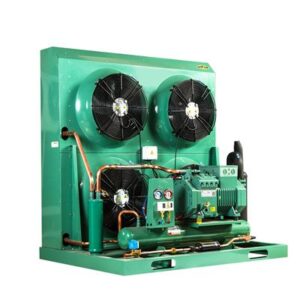
The condenser is the outdoor coil that releases the heat removed from your room. It needs free airflow through its fins. Dust and sand settle between those fins and form a blanket. Airflow drops, the condensing temperature rises and the compressor works harder for the same cooling.
You pay for that twice. The first cost is electricity. As a rule of thumb each 1 °C rise in condensing temperature adds roughly 2 to 4 percent to compressor energy use. The second cost is a breakdown. Summer afternoons in Riyadh reach the mid-40s °C and rooftops run hotter. A dirty coil in that heat pushes the system to its high pressure limit and the compressor trips when you need it most.
Plan around the weather as well as the calendar:
- Inspect the coil after every sandstorm.
- Book a full service before summer starts.
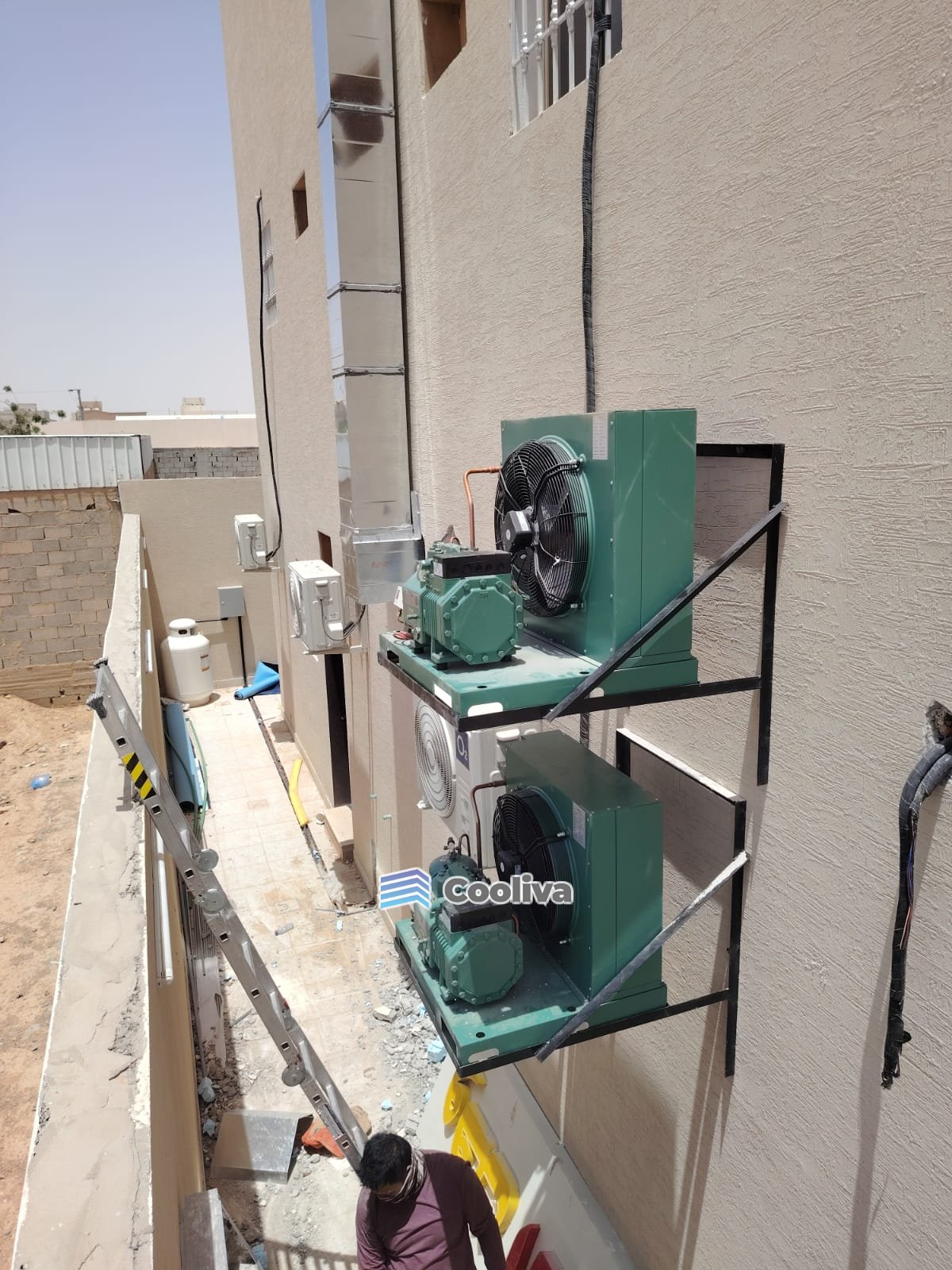
- Keep cartons, pallets and rubbish away from the condensing unit so air moves freely around it.
- In Jeddah, Dammam and other coastal cities ask the technician to check the coil for corrosion at every visit. Humid, salty air attacks the fins.
Leave the cleaning method to the technician. A high pressure washer bends the thin fins and bent fins block air as badly as dust does.
Warning signs and what they usually point to
Most failures announce themselves days or weeks ahead. Teach your staff these signs and ask them to report each one the same day.
- Slow pull-down. The room takes longer to return to its set temperature after loading. Usual causes are a dirty condenser, a frosted evaporator, low refrigerant charge or a leaking door seal.
- Short cycling. The compressor starts and stops every few minutes. This often points to low refrigerant charge, a faulty pressure switch or a controller differential that is set too narrow.
- Heavy frost on the evaporator. Humid air is getting in through the door or the defrost is not working. Frost blocks airflow, so the room warms while the unit keeps running.
- Compressor trips on hot afternoons. Look at the condenser first: a blocked coil, a failed condenser fan or hot air trapped around the unit.
- Water on the floor under the evaporator. The drain line or the drain pan is blocked.
- A rising electricity bill with the same stock. The system is running longer hours. Dirty coils, door leaks and frost are the common reasons.
- New noise or vibration. Typical sources are a worn fan motor bearing, a loose fan blade or a loose pipe clamp.
- Wet patches on the outside of the panels. A joint seal has failed or the insulation is damaged.
Two habits make faults worse. Do not lower the setpoint to hide a weak system. It adds running hours and solves nothing. Do not accept repeated refrigerant top-ups either. A sealed circuit does not consume refrigerant, so a low charge means a leak that the technician must find and repair.
What a preventive maintenance contract should include
A contract is worth signing when it states the work in detail. Check that yours covers these points:
- Visit frequency: monthly to quarterly depending on dust, door traffic and how critical your stock is, plus a visit before summer.
- A written checklist: the same list at every visit, including condenser cleaning, electrical checks, a defrost test and probe accuracy.
- A service report: measured pressures, temperatures and compressor current after each visit. Readings on paper show a trend before it becomes a fault.
- Response time: a stated time for breakdown calls in your city, including nights, weekends and public holidays.
- Parts: which parts the contract includes, which ones you pay for separately and whether the contractor stocks common items such as contactors, fan motors and probes.
- Leaks: how the technician finds, repairs and records a refrigerant leak.
Food businesses should file the service reports with their temperature records. Inspectors commonly ask to see temperature logs, so check the SFDA and municipality requirements for your activity. Our guide to cold room temperature monitoring looks at recording in more detail.
Daily habits that protect the equipment
Maintenance fails when daily use works against it. Keep product off the walls and below the evaporator air stream so cold air reaches every shelf. Close the door after each entry. Do not load more warm product than the room was designed for because the temperature then stays high for hours. These habits also lower your bill, as our article on cold room energy efficiency explains.
Frequently asked questions
How often should a technician service a cold room?
Every one to three months suits most sites. Dusty locations, rooftop units and rooms with heavy door traffic sit at the monthly end. Add one full inspection with a leak test each year.
Can my staff clean the condenser coil?
Staff should look at the coil weekly and keep the area around it clear. Cleaning means isolating the power and working next to fan blades and sharp fins. Leave it to a technician unless your team has had proper training.
My cold room holds its temperature. Does it still need maintenance?
Yes. A system with a dirty coil or a small leak often holds temperature in mild weather by running longer. The weakness appears in peak summer, when no spare capacity is left. Regular readings catch it earlier.
What should I do while I wait for the technician after a breakdown?
Keep the door closed. Note the temperature, the time and any alarm code on the controller. Check whether the breaker has tripped, but do not keep resetting it. Move the most sensitive stock to another room if the temperature passes the limit for your products.
Get your cold room checked by Cooliva
Cooliva is based in Riyadh and designs, installs and supports cold rooms and freezer rooms for restaurants, supermarkets, food suppliers and warehouses. If your chiller room or one of your freezer rooms shows a warning sign from this guide, ask for a site review. It tells you whether the room needs a service, a repair or a refurbishment and upgrade. Send the room size, the symptoms and a photo of the condensing unit through the contact page or call +966 59 799 1000.