Introduction
Cold room doors play a vital role in maintaining temperature, reducing energy loss, and ensuring smooth daily operations. Whether it is a walk-in chiller, walk-in freezer, cold storage room, supermarket cold room, or industrial refrigeration facility, the right door helps protect stored products and improve system efficiency.
A poorly selected or poorly sealed cold room door can lead to temperature fluctuation, ice buildup, compressor overload, higher electricity bills, and reduced product quality. This is why choosing between a sliding cold room door and a hinged cold room door should be based on room size, usage frequency, available space, product movement, and operational requirements.
For businesses in Saudi Arabia, where high ambient temperatures can place additional pressure on refrigeration systems, selecting the right insulated refrigeration door is an important part of cold room performance.
Why Insulated Cold Room Doors Are Important
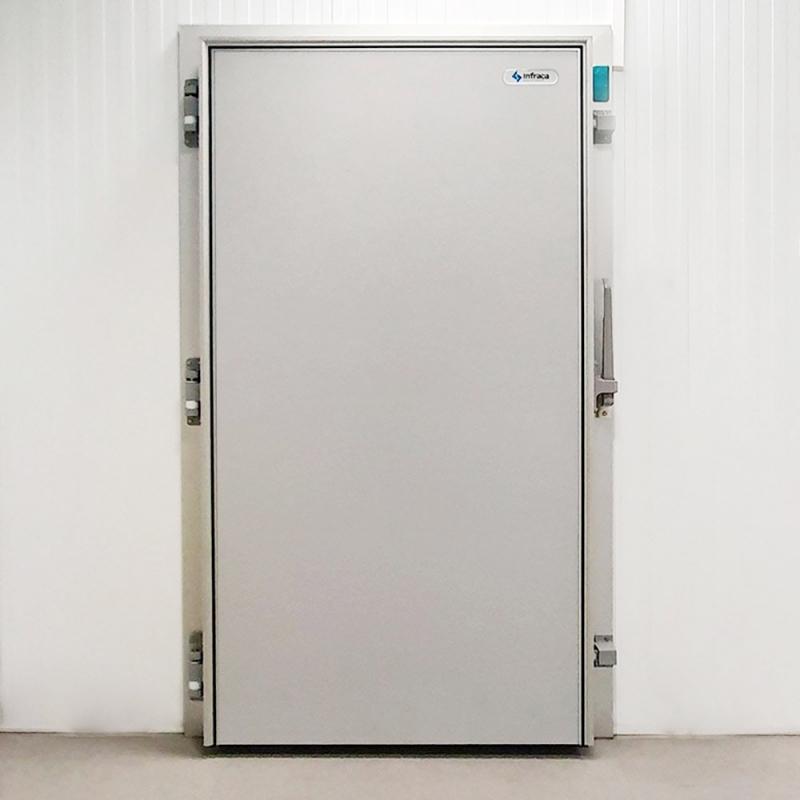
An insulated cold room door is designed to prevent heat transfer between the cold room and the external environment. Since doors are opened and closed frequently during daily operations, they are one of the most important points for temperature protection.
High-quality insulated refrigeration doors help to:
- Maintain stable internal temperature
- Reduce energy loss
- Lower compressor workload
- Protect food, beverages, medicines, and frozen products
- Minimize condensation and ice buildup
- Improve hygiene and operational safety
- Support long-term refrigeration system efficiency
If a cold room door does not seal properly, warm air enters the room and cold air escapes. This forces the refrigeration system to work harder, increasing energy consumption and the risk of breakdowns.
What Are Hinged Cold Room Doors?
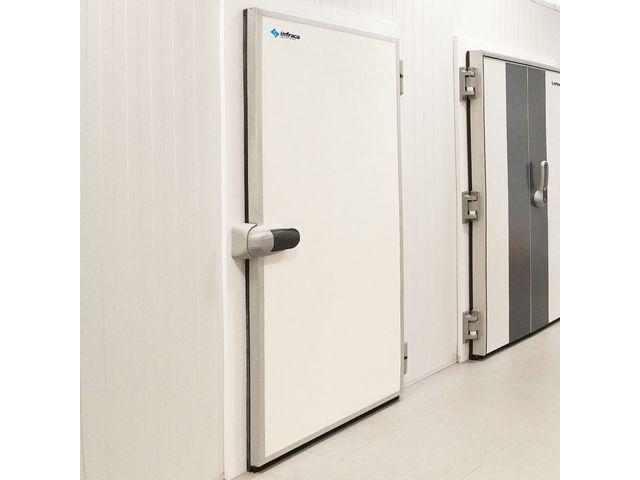
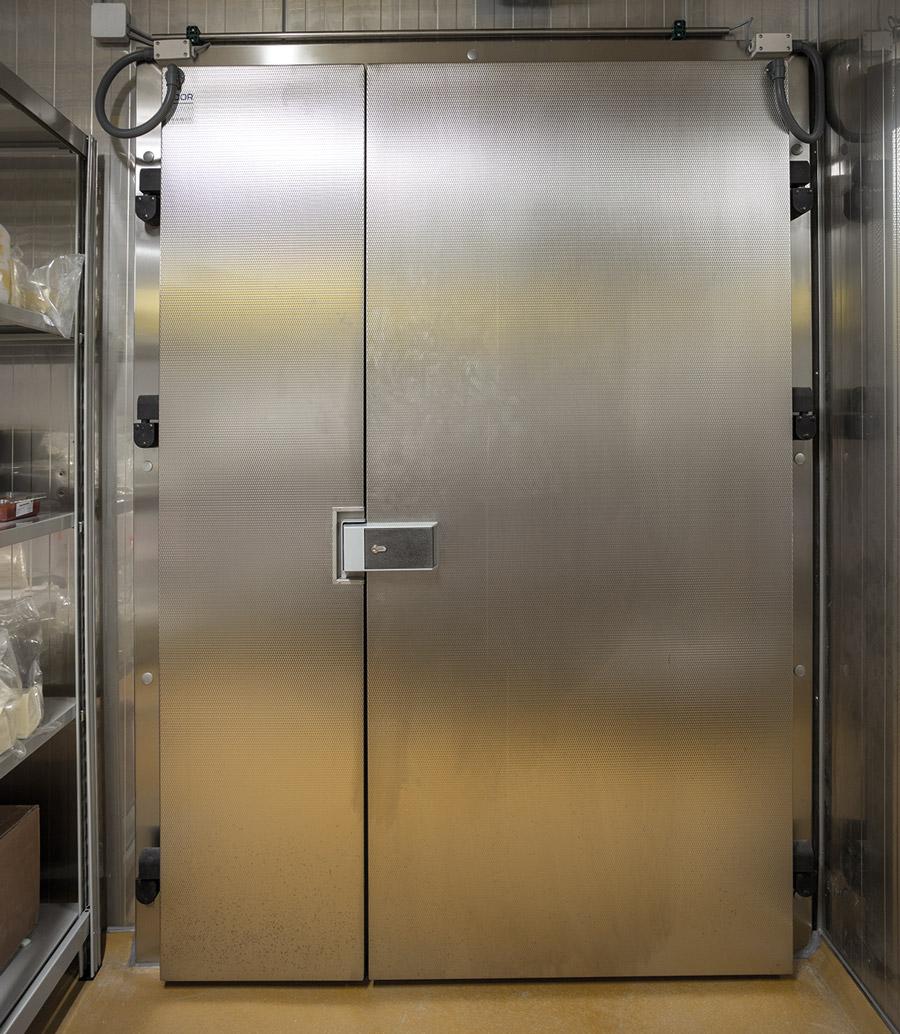
Hinged cold room doors open like standard doors using side-mounted hinges. They are commonly used in small and medium-sized cold rooms where space is available in front of the door for opening and closing.
Hinged doors are widely used in:
- Restaurants
- Cafés
- Bakeries
- Small supermarkets
- Grocery stores
- Walk-in chillers
- Small freezer rooms
- Food preparation areas
They are simple, practical, cost-effective, and easy to operate.
Advantages of Hinged Cold Room Doors
1. Lower Initial Cost
Hinged cold room doors usually have a lower initial cost compared to sliding doors. This makes them a practical choice for small businesses and compact cold room projects.
2. Easy to Operate
Hinged doors are simple to open and close. For staff working in restaurants, cafés, and retail stores, this type of door is easy to use during daily operations.
3. Excellent for Small Rooms
For smaller cold rooms, hinged doors are often the best option because they are compact, reliable, and cost-effective.
4. Strong Thermal Performance
When properly installed with high-quality gaskets and insulation, hinged cold room doors provide excellent temperature sealing.
5. Easier Maintenance
Hinged doors have a simpler mechanism, which usually makes them easier to inspect, adjust, and maintain.
What Are Sliding Cold Room Doors?
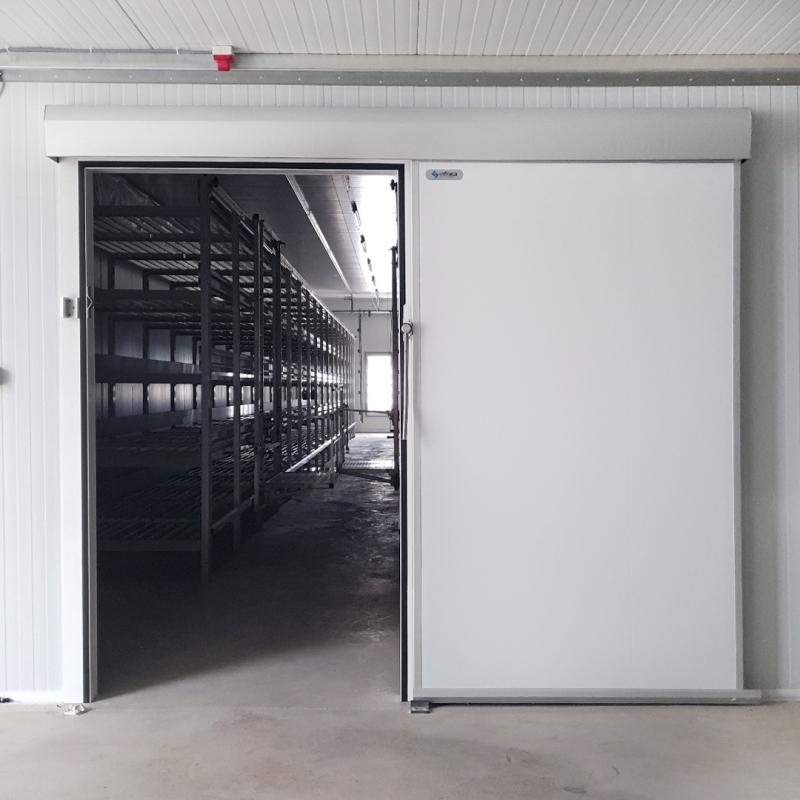
Sliding cold room doors move horizontally along a track instead of opening outward. They are commonly used in larger cold rooms, industrial cold storage facilities, warehouses, and areas where frequent movement of goods is required.
Sliding doors are suitable for:
- Large cold storage rooms
- Industrial freezer rooms
- Food warehouses
- Distribution centers
- Supermarkets and hypermarkets
- Meat and poultry storage
- Dairy and seafood facilities
- Cold rooms with trolley or pallet movement
They are especially useful where there is limited space in front of the door or where larger openings are required.
Advantages of Sliding Cold Room Doors
1. Excellent for Heavy Traffic
Sliding cold room doors are ideal for busy operations where staff, trolleys, carts, or pallet movement happen frequently. They allow wider access and smoother movement.
2. Space-Saving Design
Since sliding doors move sideways, they do not require front clearance like hinged doors. This makes them useful in areas where space is limited.
3. Suitable for Large Openings
Sliding doors are a better option for large cold rooms and industrial storage facilities that require wider door openings.
4. Durable for Industrial Use
Sliding cold room doors are designed to handle frequent usage and heavier operational requirements.
5. Strong Temperature Sealing
A properly installed sliding insulated refrigeration door provides excellent thermal performance and helps maintain stable room temperature.
Sliding vs Hinged Cold Room Doors: Comparison Table
| Feature | Hinged Door | Sliding Door |
|---|---|---|
| Initial Cost | Lower | Higher |
| Small Rooms | Excellent | Good |
| Heavy Traffic | Good | Excellent |
| Thermal Performance | Excellent | Excellent |
| Ease of Operation | Excellent | Excellent |
| Space Requirement | Needs front opening space | Saves front space |
| Large Openings | Limited | Excellent |
| Maintenance Complexity | Lower | Moderate |
| Best For | Small to medium cold rooms | Medium to large cold rooms |
| Common Applications | Restaurants, cafés, grocery stores | Warehouses, factories, supermarkets |
Which Door Is Best for Your Application?
The best cold room door depends on how the room will be used. There is no single option that fits every project.
Choose a Hinged Cold Room Door If:
- The cold room is small or medium-sized
- The room has enough front clearance
- The door opening is not very wide
- Staff movement is moderate
- You need a cost-effective solution
- The application is a restaurant, café, bakery, or small grocery store
Choose a Sliding Cold Room Door If:
- The cold room is large
- The door opening needs to be wider
- There is frequent movement of goods
- Trolleys, carts, or pallets are used
- Front space is limited
- The application is a warehouse, supermarket, factory, or distribution facility
For example, a small restaurant walk-in chiller may work very well with a hinged door, while a large warehouse freezer room may require a sliding door for better access and operational flow.
Energy Efficiency Considerations
Cold room doors directly affect energy efficiency. Every time the door opens, warm air enters and cold air escapes. If the door is not insulated or sealed correctly, the refrigeration system must work harder to restore the required temperature.
To improve energy efficiency, businesses should consider:
- Proper door insulation thickness
- High-quality rubber gaskets
- Strong closing mechanism
- Correct door size
- Proper installation alignment
- Reduced door opening time
- Air curtains or strip curtains where suitable
- Regular gasket inspection
- Quick repair of damaged seals
- Choosing the correct door type for traffic level
In high-traffic cold rooms, sliding doors or automatic systems may help reduce operational delays and improve temperature control. In smaller applications, a well-installed hinged door can provide excellent energy performance at a lower cost.
Safety Features for Freezer Room Doors
Freezer room doors require extra safety consideration because low temperatures can create risks for staff and stored products.
Important safety features include:
1. Internal Emergency Release
Freezer room doors should include an internal emergency release mechanism so a person can open the door from inside if accidentally locked in.
2. Anti-Freeze Door Heating
Freezer room doors may require heating around the frame or gasket area to prevent ice formation and door sticking.
3. Strong Door Handles
Handles should be durable, easy to grip, and suitable for frequent operation in cold environments.
4. Proper Sealing System
A good sealing system prevents warm air leakage, condensation, and ice buildup around the door.
5. Durable Flooring and Threshold Area
The area around the door should be designed to reduce slipping risks, especially in freezer applications where condensation or ice may form.
6. Visibility and Lighting
Cold rooms should have proper internal lighting and clear access points to support safe movement.
Safety should never be ignored when selecting or installing freezer room doors.
Maintenance and Durability Comparison
Both hinged and sliding cold room doors can perform well when properly installed and maintained. However, their maintenance needs can be different.
Hinged Door Maintenance
Hinged doors usually require inspection of:
- Hinges
- Door handle
- Closing mechanism
- Rubber gasket
- Door alignment
- Frame sealing
- Locking system
Because hinged doors have a simpler opening mechanism, maintenance is usually easier and less expensive.
Sliding Door Maintenance
Sliding doors require inspection of:
- Tracks
- Rollers
- Sliding mechanism
- Door alignment
- Gaskets
- Handles
- Safety release
- Frame sealing
Sliding doors are durable and suitable for heavy usage, but the track and roller system must be maintained properly to ensure smooth operation.
Common Problems Caused by Poor Door Selection
Choosing the wrong cold room door can create several operational problems, such as:
- Unstable temperature
- Higher electricity consumption
- Ice buildup around the door
- Difficulty moving products in and out
- Door damage due to heavy usage
- Air leakage
- Increased compressor workload
- Staff inconvenience
- Reduced product shelf life
- Frequent repair costs
To avoid these issues, the door should be selected based on actual business usage, not only based on price.
How to Choose the Right Insulated Refrigeration Door
Before choosing a cold room door, businesses should consider:
- Cold room size
- Required temperature
- Chiller or freezer application
- Door opening size
- Available space around the door
- Frequency of door opening
- Type of product movement
- Use of trolleys, carts, or pallets
- Energy efficiency requirements
- Safety requirements
- Maintenance access
- Budget and long-term operating cost
A professional cold room supplier can recommend the right door type after understanding the site layout and operational workflow.
Why Work With Cooliva?
At Cooliva, we provide cold room solutions designed for reliable temperature control, efficient operation, and long-term performance. Our team supports businesses with cold room design, installation, insulated cold room doors, walk-in chillers, walk-in freezers, cold storage rooms, and maintenance support.
Whether you need a hinged cold room door for a restaurant or a sliding cold room door for an industrial cold storage facility, Cooliva can help you select the right solution based on your project requirements.
Conclusion
Cold room doors are a key part of refrigeration performance. The right insulated refrigeration door helps maintain temperature, reduce energy loss, improve operational efficiency, and protect stored products.
Hinged cold room doors are often suitable for small and medium applications where cost, simplicity, and easy operation are important. Sliding cold room doors are better suited for larger cold rooms, heavy traffic areas, and industrial applications where wide access and smooth movement are required.
Before choosing between a sliding cold room door and a hinged cold room door, businesses should consider space, traffic, temperature requirement, safety, durability, and long-term energy efficiency.