Introduction
The condensing unit is one of the most important parts of any cold room, freezer room, or industrial cooling system. It is responsible for removing heat from the refrigeration system and helping the cold room maintain the required temperature consistently.
A properly selected cold room condensing unit improves cooling performance, reduces energy consumption, supports compressor efficiency, and helps protect temperature-sensitive products. On the other hand, choosing the wrong unit can lead to poor cooling, high electricity bills, frequent breakdowns, and reduced equipment life.
For businesses such as restaurants, supermarkets, central kitchens, food warehouses, cold storage facilities, and industrial sites, selecting the right condensing unit is a major factor in long-term reliability and operational cost control.
What Is a Condensing Unit?
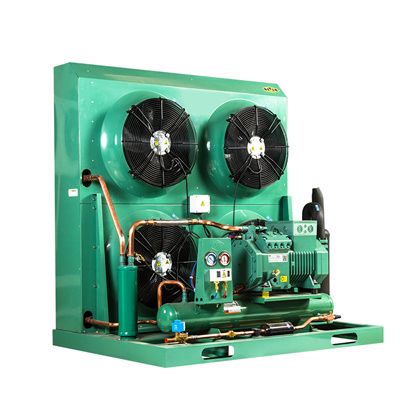
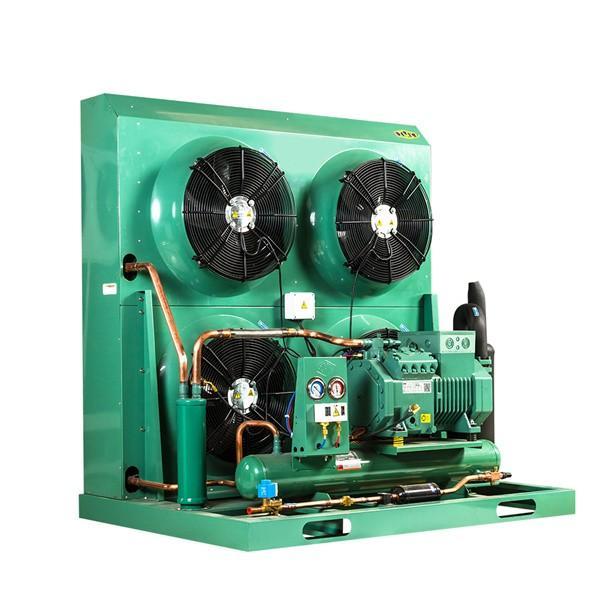
A condensing unit is the outdoor or external part of a refrigeration system. Its main job is to remove the heat absorbed from inside the cold room and release it outside.
In a typical cold room system, the evaporator absorbs heat from inside the room. The refrigerant then carries this heat to the condensing unit. Inside the condensing unit, the compressor, condenser coil, fan, and other components work together to reject that heat and prepare the refrigerant to continue the cooling cycle.
In simple terms, the evaporator removes heat from the cold room, while the condensing unit removes that heat from the refrigeration system.
Without a properly working condensing unit, the cold room cannot maintain stable cooling.
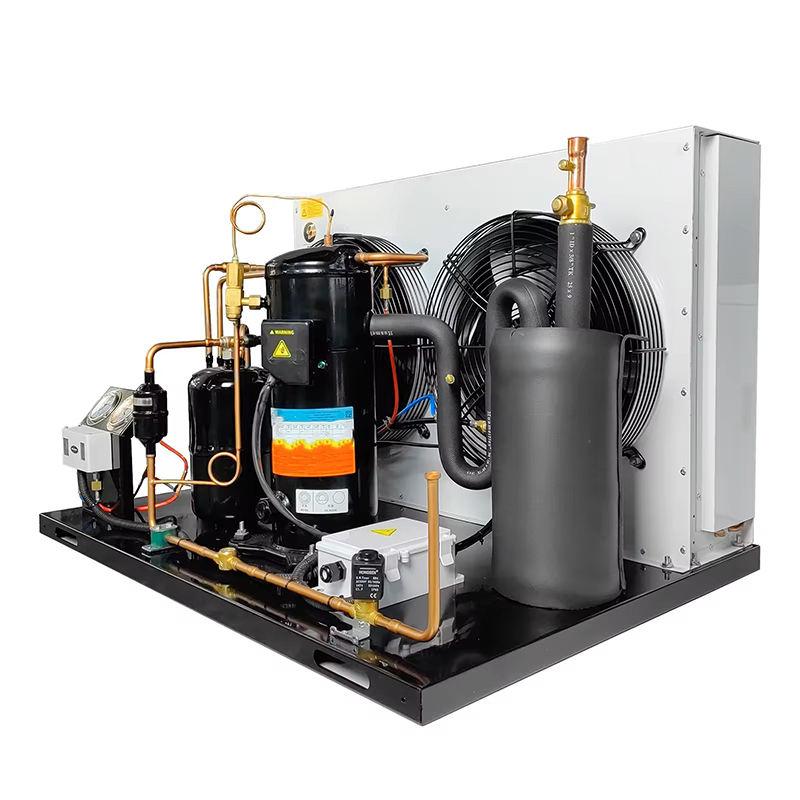
Main Components of a Condensing Unit
A cold room condensing unit includes several important components that work together to support cooling performance.
1. Refrigeration Compressor
The refrigeration compressor is the main mechanical component of the condensing unit. It compresses the refrigerant gas and increases its pressure and temperature so it can release heat through the condenser.
The compressor has a direct impact on cooling capacity, power consumption, system performance, and equipment life.
2. Condenser Coil
The condenser coil helps release heat from the refrigerant to the surrounding air or water. As hot refrigerant gas passes through the condenser coil, it loses heat and changes into a liquid state.
A clean and properly sized condenser coil is important for efficient heat rejection.
3. Condenser Fan
In air-cooled condensing units, the fan moves air across the condenser coil to remove heat. If the fan is weak, damaged, or blocked, the system may overheat and consume more electricity.
4. Liquid Receiver
The liquid receiver stores liquid refrigerant and helps maintain a stable refrigerant supply to the system. It is especially useful in systems where operating conditions or cooling loads may change.
5. Filter Drier
The filter drier helps remove moisture and particles from the refrigerant circuit. This protects the compressor, expansion valve, and other system components.
6. Pressure Controls and Safety Devices
Condensing units include safety controls that monitor high pressure, low pressure, and operating conditions. These controls help protect the compressor and system from damage.
7. Electrical Control Panel
The control panel manages the operation of the compressor, fan, protection devices, and other electrical components. A properly designed control panel improves safety and system reliability.
How Does a Condensing Unit Work?
The condensing unit works as part of the refrigeration cycle.
Here is a simple explanation:
- The evaporator absorbs heat from inside the cold room.
- The refrigerant carries the absorbed heat back to the compressor.
- The compressor pressurizes the refrigerant gas.
- The hot refrigerant gas moves into the condenser coil.
- The condenser coil releases heat to the outside air or water.
- The refrigerant changes from gas to liquid.
- The liquid refrigerant returns to the system to continue the cooling cycle.
This cycle continues until the cold room reaches and maintains the required temperature.
How to Determine the Required Compressor Capacity
Choosing the correct compressor capacity is one of the most important steps in cold room design. The compressor should not be selected based only on room size. It must be selected according to the actual cooling load of the project.
Important factors include:
- Cold room size
- Required temperature
- Type of stored products
- Product loading temperature
- Quantity of products loaded per day
- Door opening frequency
- Ambient temperature around the condensing unit
- Insulation thickness and quality
- Chiller or freezer application
- Required cooling pull-down time
- Operating hours
- Refrigerant type
- Evaporator capacity
- Future expansion requirements
If the compressor is too small, the cold room may not reach the required temperature. If it is too large, the system may short cycle, consume more energy, and operate inefficiently.
A professional refrigeration supplier should calculate the cooling load and select the compressor capacity accordingly.
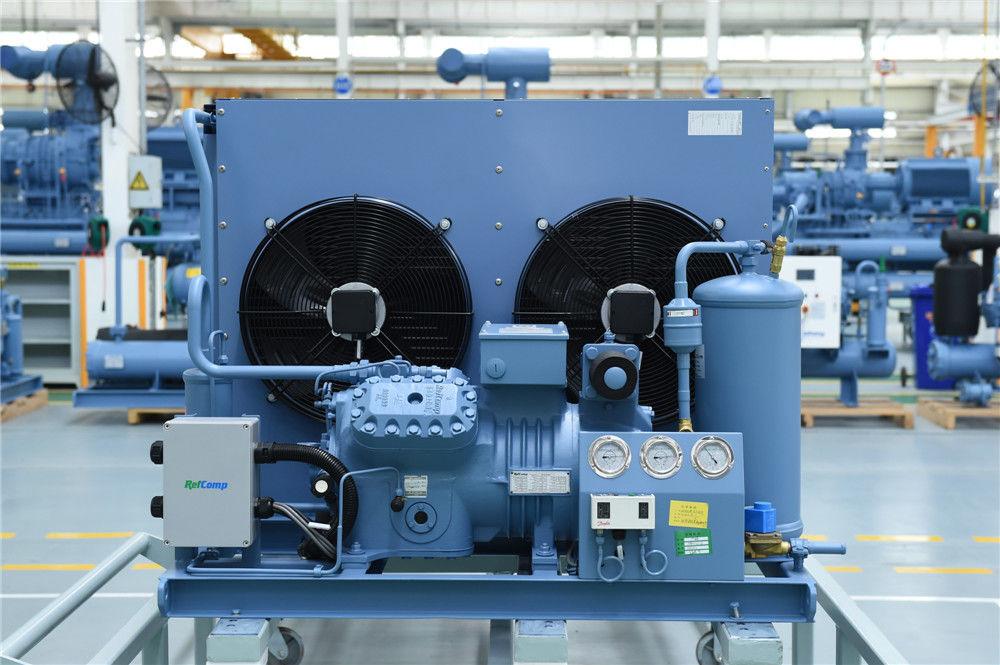
Why Bitzer Compressors Are Widely Used
Bitzer compressors are widely used in commercial and industrial refrigeration systems because they are known in the market for reliability, strong performance, and suitability for different cooling applications.
Many cold room suppliers and refrigeration contractors use Bitzer compressors for:
- Cold rooms
- Freezer rooms
- Supermarkets
- Food storage facilities
- Industrial refrigeration systems
- Walk-in chillers
- Walk-in freezers
- Cold storage warehouses
Bitzer compressors are commonly preferred because they offer stable operation, strong cooling performance, availability across different capacities, and compatibility with a wide range of refrigeration applications.
For businesses, using a trusted refrigeration compressor can help improve system reliability and reduce the risk of unexpected cooling failure.
Common Causes of High Energy Consumption
High energy consumption in cold rooms is often caused by poor system design, lack of maintenance, or incorrect equipment selection. The condensing unit plays a major role in electricity usage because the compressor is usually one of the highest power-consuming components in the system.
Common causes include:
1. Incorrect Compressor Capacity
An undersized compressor may run continuously, while an oversized compressor may start and stop too frequently. Both situations can increase electricity consumption.
2. Dirty Condenser Coil
Dust and dirt on the condenser coil reduce heat rejection. This makes the compressor work harder and increases power usage.
3. Poor Ventilation Around the Condensing Unit
If the condensing unit is installed in a poorly ventilated area, hot air may remain around the unit. This reduces efficiency and increases operating pressure.
4. High Ambient Temperature
In Saudi Arabia, outdoor temperatures can be very high, especially during summer. A condensing unit must be selected and installed with local climate conditions in mind.
5. Refrigerant Issues
Low refrigerant charge, overcharging, or refrigerant leakage can affect cooling performance and increase compressor workload.
6. Frequent Door Opening
Frequent door opening allows warm air to enter the cold room. This increases cooling load and forces the condensing unit to operate longer.
7. Poor Insulation
Weak or damaged insulation allows heat to enter the cold room. This increases the load on the refrigeration system.
8. Lack of Preventive Maintenance
Without regular maintenance, small issues can develop into major energy and performance problems.
Preventive Maintenance Recommendations
Preventive maintenance helps improve system performance, reduce energy consumption, and extend the life of the condensing unit.
Important maintenance recommendations include:
1. Clean the Condenser Coil Regularly
The condenser coil should be cleaned to remove dust, sand, grease, and dirt. This is especially important in outdoor environments.
2. Check Compressor Operation
Technicians should inspect compressor sound, vibration, pressure readings, oil level, and operating temperature.
3. Inspect Electrical Connections
Loose or damaged electrical connections can cause system failure and safety issues. Electrical panels should be checked regularly.
4. Check Refrigerant Pressure
Incorrect refrigerant pressure may indicate leakage, blockage, overcharging, or undercharging.
5. Inspect Condenser Fans
Fans should rotate properly and provide enough airflow across the condenser coil.
6. Keep the Area Around the Unit Clear
The condensing unit should have enough space around it for proper airflow and heat rejection.
7. Check Safety Controls
High-pressure and low-pressure controls should be tested to ensure the system is protected during abnormal operating conditions.
8. Schedule Professional Servicing
Cold rooms used for food, beverage, pharmaceutical, and industrial storage should be serviced by qualified refrigeration technicians to avoid unexpected breakdowns.
Air-Cooled vs Water-Cooled Condensing Units
Condensing units are commonly available in air-cooled and water-cooled systems. The right choice depends on project requirements, installation conditions, cooling capacity, water availability, and maintenance planning.
Air-Cooled Condensing Units
Air-cooled condensing units use fans to move air across the condenser coil and reject heat into the surrounding environment.
They are commonly used because they are easier to install and do not require a continuous water supply.
Air-cooled systems are suitable for:
- Restaurants
- Cafés
- Small and medium cold rooms
- Supermarkets
- Warehouses
- Walk-in chillers and freezers
Advantages include:
- Easier installation
- Lower water dependency
- Suitable for many commercial applications
- Simple maintenance structure
- Flexible outdoor installation
However, air-cooled units require proper ventilation and may be affected by high outdoor temperatures if not designed correctly.
Water-Cooled Condensing Units
Water-cooled condensing units use water to remove heat from the refrigerant. They can offer efficient performance in certain industrial and high-capacity applications.
Water-cooled systems may be suitable for:
- Large cold storage facilities
- Industrial cooling systems
- High-capacity refrigeration projects
- Facilities with proper water supply and water treatment systems
Advantages include:
- Effective heat rejection
- Suitable for larger capacity systems
- Can perform well when designed and maintained correctly
However, water-cooled systems require water availability, water treatment, pumps, and additional maintenance planning.
Which Condensing Unit Is Right for Your Cold Room?
The right condensing unit depends on your business requirements and operating conditions. Before choosing a system, businesses should consider:
- Required cooling capacity
- Cold room temperature
- Chiller or freezer application
- Product type and loading volume
- Site conditions
- Outdoor temperature
- Available installation space
- Airflow and ventilation
- Energy efficiency goals
- Maintenance access
- Budget and long-term operating cost
A properly selected condensing unit provides stable cooling, better energy efficiency, and longer equipment life.
Why Work With Cooliva?
At Cooliva, we provide cold room and refrigeration solutions designed for reliable performance, efficient operation, and long-term temperature control. Our team supports businesses with cold room design, installation, walk-in chillers, walk-in freezers, industrial cooling systems, condensing unit selection, and maintenance support.
Whether you need a cold room condensing unit for a restaurant, supermarket, warehouse, food distribution facility, central kitchen, or industrial cold storage project, Cooliva can help you choose the right solution based on your actual requirements.
Conclusion
The condensing unit is the heart of every cold room refrigeration system. It removes heat, supports compressor operation, and plays a major role in cooling performance and energy consumption.
Choosing the right cold room condensing unit requires proper calculation, professional installation, and regular maintenance. The compressor capacity, condenser type, airflow, ambient temperature, and operating conditions must all be considered before selecting a system.
For businesses in Saudi Arabia, where climate conditions can be demanding, choosing a reliable condensing unit is essential for stable cooling, lower operating costs, and product protection.