the introduction
The condensing unit is one of the most important components in any cold room, freezer, or industrial refrigeration system. It is responsible for removing heat from the refrigeration system and helps the cold room maintain a constant required temperature.
Choosing the right condensing unit for a cold storage room improves cooling performance, reduces electricity consumption, enhances compressor efficiency, and protects heat-sensitive products. Conversely, choosing an unsuitable unit can lead to poor cooling, higher electricity bills, frequent breakdowns, and a reduced equipment lifespan.
For establishments such as restaurants, supermarkets, central kitchens, food warehouses, refrigerated storage facilities, and industrial sites, selecting the right condensing unit is an important factor in ensuring long-term reliability and controlling operating costs.
What is a condensation unit?
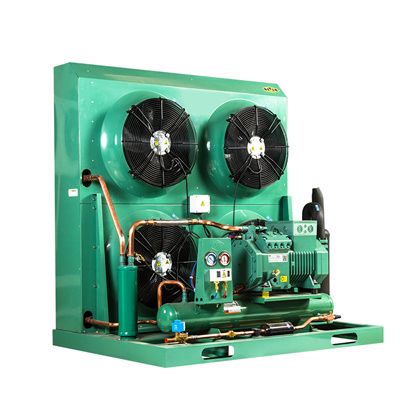
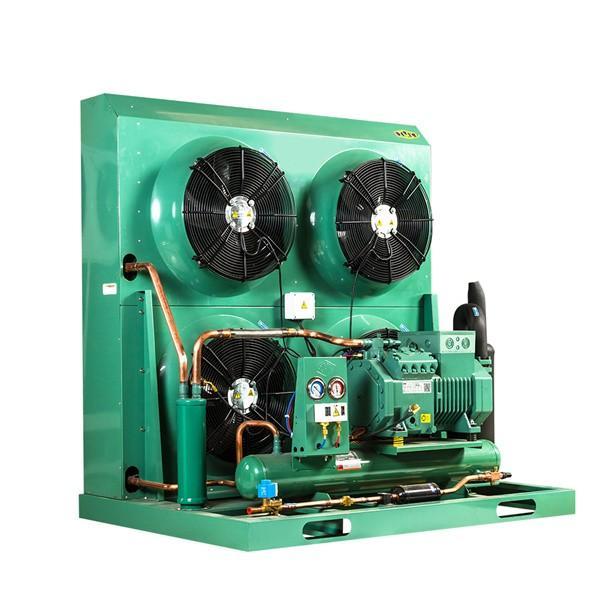
The condensing unit is the external or external component of the refrigeration system. Its primary function is to expel the heat absorbed from inside the refrigeration chamber and release it to the outside.
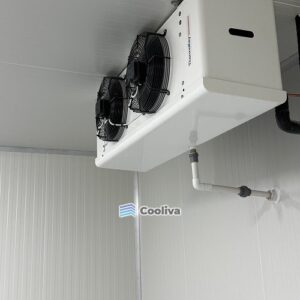
In a conventional cold storage system, the evaporator absorbs heat from inside the room. The refrigerant then transfers this heat to the condensing unit. Inside the condensing unit, the compressor, condenser coil, fan, and other components work together to expel the heat and prepare the refrigerant to continue the cooling cycle.
Simply put, the evaporator draws heat from inside the cooling chamber, while the condensing unit expels this heat from the cooling system.
Without a properly functioning condensing unit, the cold room will not be able to maintain a consistent cooling.
Main components of a condensing unit
The condensing unit of cold rooms contains several important components that work together to support cooling performance.
1. Refrigeration compressor
The refrigeration compressor is the main mechanical component in the condensing unit. It compresses the refrigerant gas, raising its pressure and temperature so that it can expel heat through the condenser.
The compressor directly affects cooling capacity, electricity consumption, system performance, and equipment lifespan.
2. Capacitor coil
The condenser coil helps to dissipate heat from the refrigerant into the surrounding air or water. As the hot refrigerant gas passes through the condenser coil, it loses heat and turns into a liquid state.
Having a clean and appropriately sized condenser coil is very important for efficient heat dissipation.
3. Condenser fan
In air-cooled condensing units, a fan moves air through the condenser coil to expel heat. If the fan is weak, damaged, or obstructed, the system may overheat and consume more electricity.
4. Coolant tank
The refrigerant reservoir stores the liquid refrigerant and helps maintain a constant supply to the system. It is especially important in systems where operating conditions or cooling loads change.
5. Drying filter
The drying filter helps remove moisture and impurities from the refrigeration circuit. This protects the compressor, expansion valve, and other system components.
6. Pressure control devices and protection systems
Condensing units contain safety devices that monitor high pressure, low pressure, and operating conditions. These systems help protect the compressor and the system from damage.
7. Electrical control panel
The control panel manages the operation of the compressor, fan, protection devices, and other electrical components. A properly designed control panel enhances safety and improves system reliability.
How does a condensing unit work?
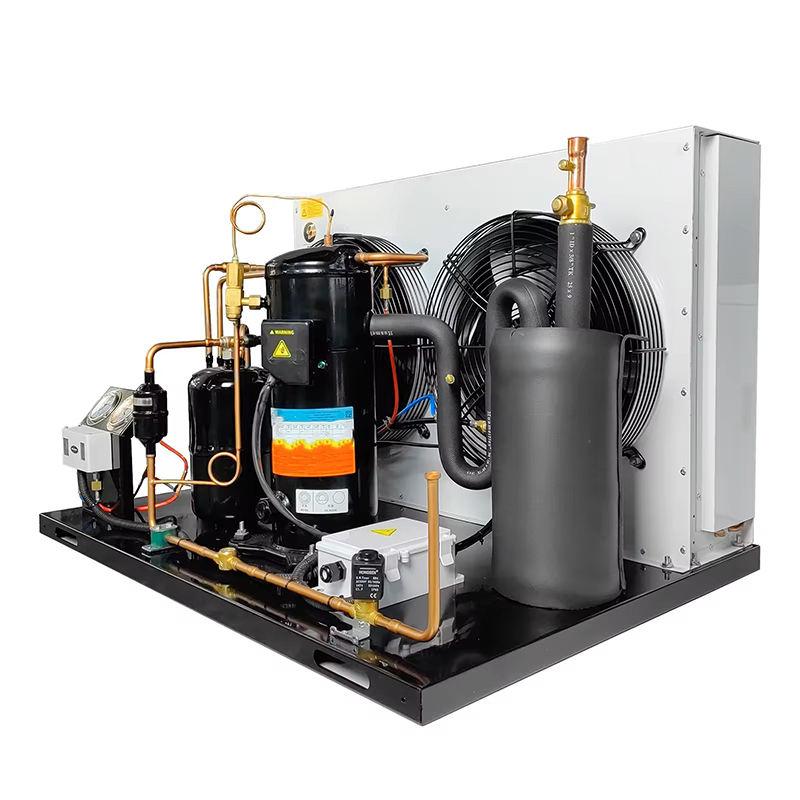
The condensing unit functions as an essential part of the refrigeration cycle.
Here is a simplified explanation of how it works:
- The evaporator absorbs heat from inside the cooling chamber.
- The refrigerant transfers the absorbed heat to the compressor.
- The compressor compresses the refrigerant gas.
- The hot refrigerant gas moves to the condenser coil.
- The condenser coil expels heat to the outside air or water.
- The refrigerant changes from a gas to a liquid.
- The liquid refrigerant returns to the system to complete the cooling cycle.
This cycle continues until the cooling chamber reaches and maintains the required temperature.
How to determine the required compressor capacity
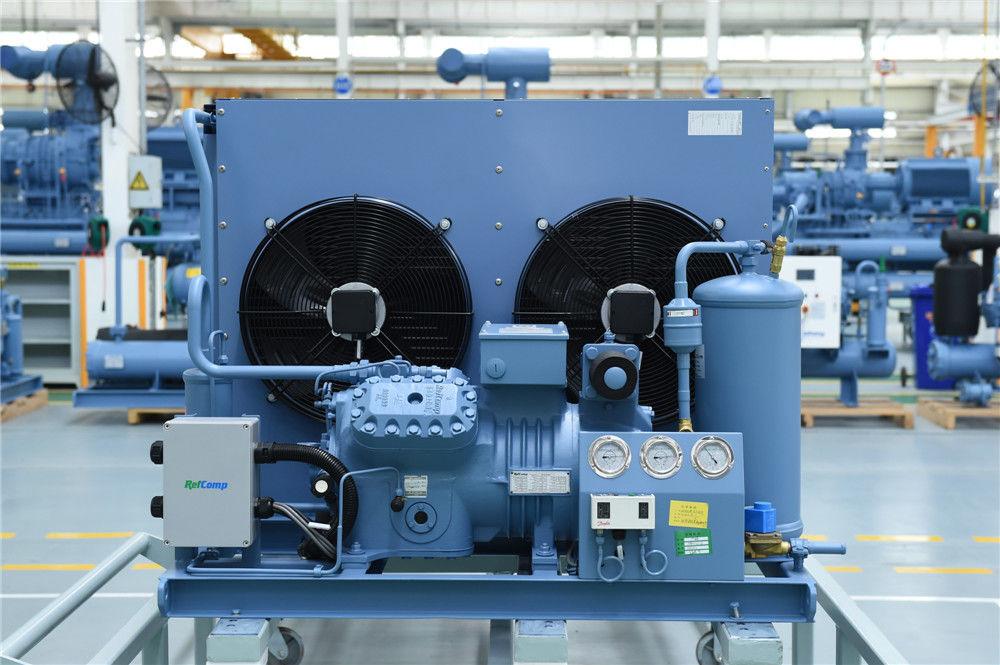
Choosing the right compressor capacity is one of the most important steps in designing a cold storage room. The compressor should not be selected based solely on room size, but rather according to the actual cooling load of the project.
Important factors include the following:
- Cold room size
- Required temperature
- Type of stored products
- Product temperature when brought into the room
- Quantity of products that are entered daily
- Number of times the door was opened
- Ambient temperature of the condensing unit
- Thickness and quality of insulation
- Type of use: Refrigeration or freezing
- Time required to reach the desired cooling temperature
- Operating hours
- Type of refrigerant
- Evaporator capacity
- Future expansion requirements
If the compressor is too small, the cold storage room may not reach the required temperature. If it is too large, the system may operate with frequent on/off cycles, increasing energy consumption and reducing efficiency.
Therefore, a qualified refrigeration supplier or technician should calculate the refrigeration load and select the appropriate compressor capacity accordingly.
Why are Bitzer compressors widely used?
Bitzer compressors are widely used in commercial and industrial refrigeration systems because they are known in the market for their reliability, strong performance, and suitability for various refrigeration applications.
Many cold room suppliers and refrigeration system contractors use Bitzer compressors in:
- cold rooms
- Freezer rooms
- supermarket
- Food storage facilities
- Industrial cooling systems
- Commercial cold storage rooms
- Commercial freezer rooms
- refrigerated storage warehouses
Bitzer compressors are often preferred because they offer stable operation, strong cooling performance, are available in different capacities, and are compatible with a wide range of cooling applications.
For facilities, using a reliable refrigeration compressor helps improve system reliability and reduce the likelihood of sudden refrigeration failures.
Common reasons for high electricity consumption
High electricity consumption in cold storage rooms is often due to poor system design, insufficient maintenance, or the selection of unsuitable equipment. The condensing unit plays a significant role in electricity consumption, as the compressor is typically one of the most energy-intensive components in the system.
Common causes include the following:
1. Choosing an unsuitable compressor capacity
A compressor that is too small may run continuously, while one that is too large may start and stop frequently. In both cases, electricity consumption can increase.
2. Dirty capacitor coil
Accumulation of dust and dirt on the condenser coil reduces heat expulsion efficiency, causing the compressor to work at a higher voltage and increasing energy consumption.
3. Poor ventilation around the condensing unit
If the condensing unit is installed in a poorly ventilated location, hot air may remain around the unit. This reduces efficiency and increases operating pressure.
4. High ambient temperature
In Saudi Arabia, outside temperatures can be very high, especially during the summer. Therefore, the selection and installation of a condensing unit must take local climatic conditions into account.
5. Refrigerant problems
A shortage of refrigerant, an excess of it beyond the required limit, or the presence of a leak can affect cooling performance and increase the load on the compressor.
6. Opening the door frequently
Opening the door frequently allows warm air to enter the cooling room, increasing the cooling load and forcing the condensing unit to operate for longer periods.
7. Poor insulation
Poor or damaged insulation allows heat to enter the cooling room, increasing the load on the cooling system.
8. Lack of preventative maintenance
Without regular maintenance, small problems can turn into major issues in energy consumption and system performance.
Preventive maintenance recommendations
Preventive maintenance helps improve system performance, reduce electricity consumption, and extend the life of the condensing unit.
The most important maintenance recommendations include the following:
1. Clean the capacitor coil regularly.
The condenser coil must be cleaned to remove dust, sand, oils, and dirt. This is especially important in outdoor environments.
2. Compressor operation check
Technicians should check the compressor’s sound, vibration, pressure readings, oil level, and operating temperature.
3. Checking electrical connections
Loose or damaged electrical connections can cause system malfunctions and safety problems. Therefore, electrical panels should be inspected regularly.
4. Check the coolant pressure
Incorrect refrigerant pressure may indicate a leak, blockage, overcharge, or undercharge.
5. Check the condenser fans
The fans must function properly and provide sufficient airflow through the condenser coil.
6. Keep the area around the unit clear.
Sufficient space must be provided around the condensing unit to ensure proper airflow and efficient heat expulsion.
7. Examination of security systems
High and low pressure control systems must be tested to ensure that the system is protected during abnormal operating conditions.
8. Professional maintenance scheduling
Refrigerated rooms used for storing food, beverages, pharmaceutical products, or industrial products must be maintained by qualified refrigeration technicians to avoid sudden breakdowns.
Air-cooled versus water-cooled condensing units
Condensing units are typically available with two cooling systems: air-cooled and water-cooled. The appropriate choice depends on project requirements, installation conditions, cooling capacity, water availability, and maintenance plan.
Air-cooled condensing units
Air-cooled condensing units use fans to move air through the condenser coil and expel heat to the surrounding environment.
They are commonly used because they are easier to install and do not require a continuous water supply.
Air-cooled systems are suitable for:
- Restaurants
- cafes
- Small and medium-sized cold rooms
- supermarket
- warehouses
- Commercial cold storage and freezing rooms
Features include:
- Easy installation
- Less reliance on water
- Suitable for many commercial uses
- Simpler maintenance
- Flexibility in external composition
However, air-cooled cooling units require proper ventilation and may be affected by high outside temperatures if they are not designed correctly.
Water-cooled condensing units
Water-cooled condensing units use water to remove heat from the refrigerant. They can offer efficient performance in some industrial applications and high-capacity projects.
Water-cooled cooling systems may be suitable for:
- Large refrigerated storage facilities
- Industrial cooling systems
- High-capacity cooling projects
- Facilities that have a suitable water source and water treatment systems
Features include:
- Effective heat dissipation
- Suitable for large-capacity systems
- It can perform well when properly designed and maintained.
However, water-cooled systems require water supply, water treatment, pumps, and an additional maintenance plan.
Which condensing unit is suitable for your cold room?
The appropriate condensing unit depends on your business requirements and operating conditions. Before selecting a system, facilities should consider the following:
- Required cooling capacity
- Cold room temperature
- Type of use: Refrigeration or freezing
- Product type and loading size
- Site conditions
- outdoor temperature
- Available installation space
- Airflow and ventilation
- Energy efficiency goals
- Easy access to maintenance work
- Budget and long-term operating costs
Choosing the right condensing unit provides consistent cooling, higher energy efficiency, and a longer operating life for the equipment.
Why choose Cooliva?
At Cooliva, we offer cold storage and refrigeration solutions designed for reliable performance, efficient operation, and long-term temperature control. Our team supports facilities in the design and installation of cold storage rooms, commercial cold storage, commercial freezers, industrial refrigeration systems, condensing unit selection, and maintenance services.
Whether you need a condensing unit for a cold room in a restaurant, supermarket, warehouse, food distribution facility, central kitchen, or industrial cold storage project, Cooliva can help you choose the right solution based on your actual requirements.
Conclusion
The condensing unit is the heart of every cold storage system. It expels heat, supports the compressor’s operation, and plays a key role in cooling performance and electricity consumption.
Choosing the right condensing unit for a cold room requires careful calculation, professional installation, and regular maintenance. Compressor capacity, condenser type, airflow, ambient temperature, and operating conditions must all be considered before selecting the system.
For facilities in Saudi Arabia, where climatic conditions are demanding, choosing a reliable condensing unit is essential to ensure stable cooling, reduce operating costs, and protect products.